Background
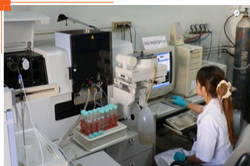
The ASEAN Center for Food Contact Materials Testing is the governmental laboratory under the Division of Food Products and Food Contact Materials, Department of Science Service (DSS), Ministry of Science and Technology, Thailand.
With more than 30 years of expertise, the center plays an important role in providing testing services of food contact material safety to ensure that the products manufactured by Thai industries meet the requirements of national or international standards and regulations in order to protect Thai consumers’ health.
Since 2011, the center has been committed by the Ministry of Commerce to issue the Certificate of Analysis (COA) in the scope of food contact materials to support Thai exporters.
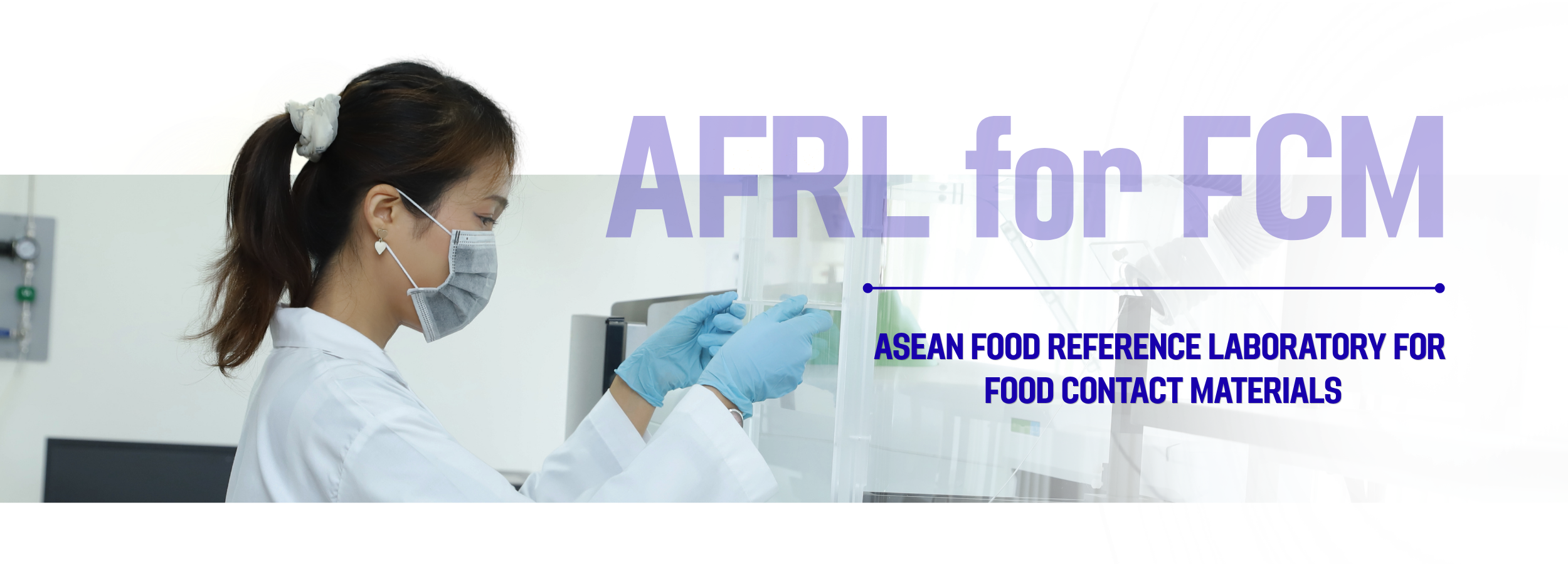
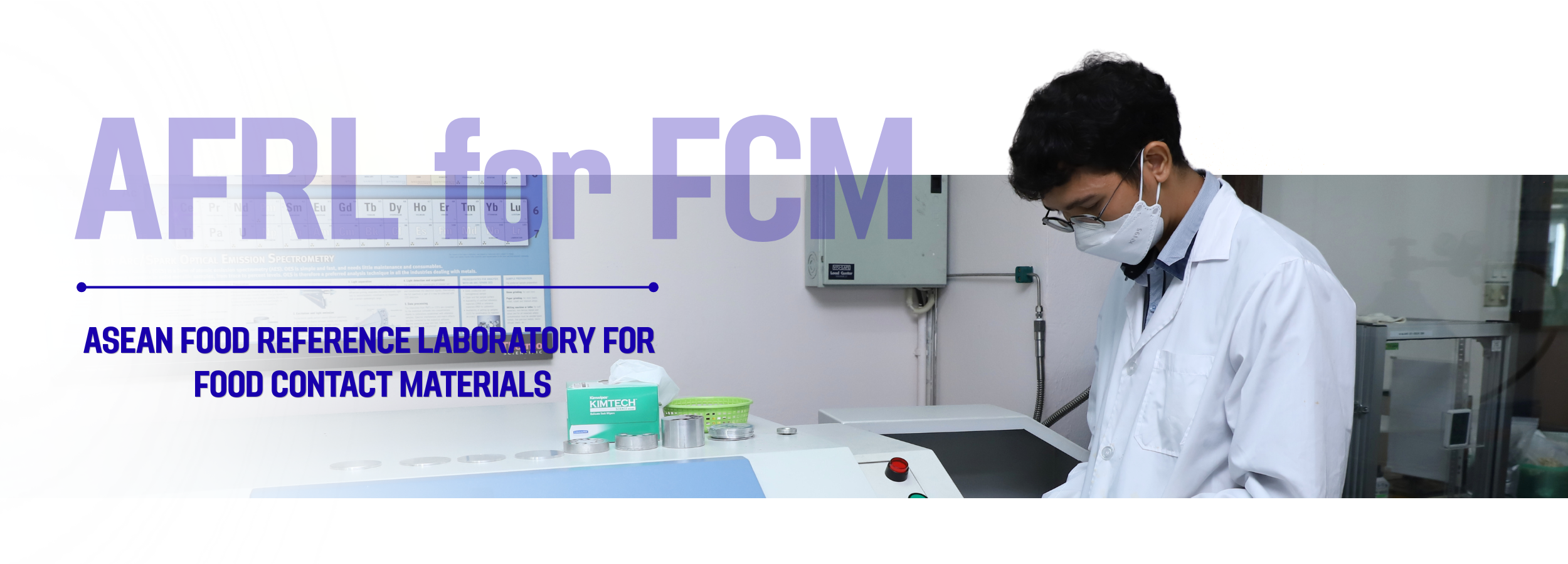
In the ASEAN region, the center, integrating with the Division of Chemical and Consumer Products under the supervision of DSS, has been endorsed by the ASEAN Consultative Committee on Standards and Quality – Prepared Food Products Working Group (ACCSQ-PFPWG) to represent the ASEAN Food Reference Laboratory for Food Contact Materials (AFRL for FCM) since September 2014.
Establishment of AFRL for FCM
As the vision of ASEAN leaders to transform ASEAN into a single market by 2015, 9 working groups of products were established under the supervision of the ASEAN Consultative Committee on Standards and Quality (ACCSQ) in order to facilitate the ASEAN Free Trade Area (AFTA) and initially harmonize regulatory requirements in several areas among ASEAN. One of the most concerning products is prepared food products, which can be contaminated not only from the environment but also from chemical migration of packaging. By this reason, ASEAN member countries have seen the importance of safety in the use of containers for food and food contact materials to ensure the safety of food products.
11th ACCSQ-PFPWG meeting, Manila, Philippines
The committee approved the proposal of Thailand by DSS on the establishment of the ASEAN Reference Laboratory on food contact materials (AFRL for FCM) by 2014, as written in the AEC scorecard. The committee assigned Thailand as the leader in the survey and collection of standards and regulations relating to food contact materials among ASEAN member states.
On-site visit at DSS
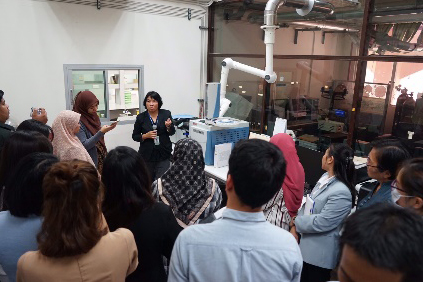
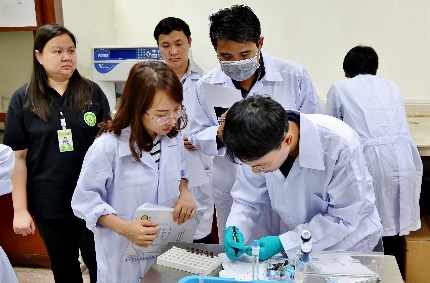
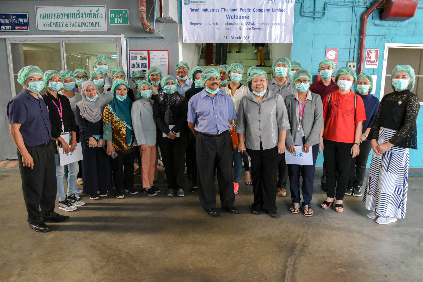
Three ASEAN experts from Singapore, Malaysia and Viet Nam carried out the on-site visit at DSS in order to evaluate the performances and capabilities as the candidate of AFRL for FCM.
19th ACCSQ-PFPWG meeting, Yangon, Myanmar
The committee endorsed DSS as AFRL for FCM in the scope of five materials.
21st ACCSQ-PFPWG meeting, Manila, Philippines
The additional scope of silicone was officially approved.
Roles and functions of AFRLs
AFRLs have the roles and the functions to support technical issues related to food and food-related testing in the ASEAN network in the area of their expertise.
Recommend new analytical test methods to be used by NFRLs.
Provide/coordinate proficiency testing (PT) or interlaboratory comparisons in the ASEAN region and provide pertinent information on proficiency testing or interlaboratory comparisons organized by other relevant organizations.
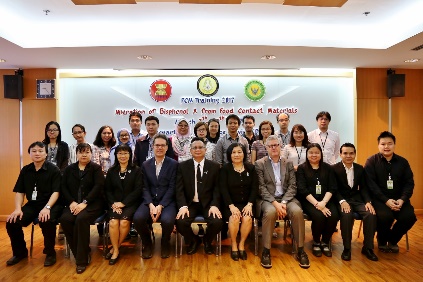
Conduct training in the specific areas of expertise, if necessary.
Provide information on the availability of food and food-related testing laboratories in the area of expertise in ASEAN upon request.
Become a resource of information for certified reference materials (CRMs) or reference materials (RMs).
Upon request, serve as reference laboratories in cases where there are disputes in analytical test results.
Expertise in food contact materials
- Testing food contact materials and contamination caused by contact materials with advanced analytical techniques in accordance with the regulations of trading partners, such as the EU and Japan.
- Knowledgeable about the testing and safety regulations of the European Union, Japan and the United States.
- Organization of proficiency testing or inter-laboratory comparisons.
- Organization of training programs on special testing techniques with foreign entities.
- Coordination and collaboration with relevant agencies, both locally and abroad.
The expertise of staff scientists
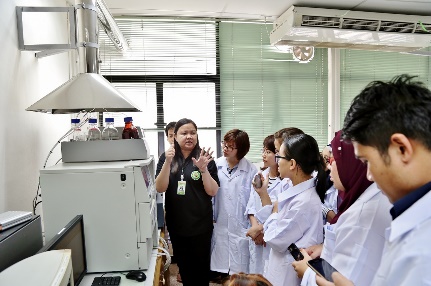
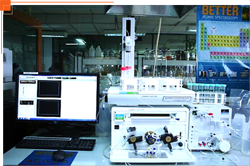
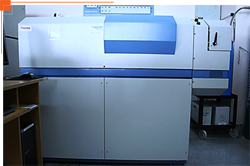
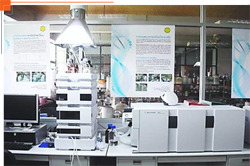
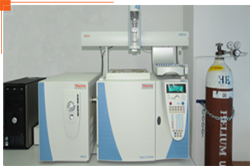
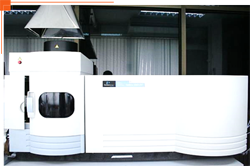
- Qualifications and expertise in the field of advanced testing tools such as LC-MS-MS, HPLC, LC-ICP-MS and GC-MS.
- Lecturers in training on testing and domestic and foreign regulations of food contact materials to the public through various media such as television and radio.
- Consultation on the safety of food containers for industries.
- Technical committee experts in different departments such as the Department of Agriculture, the Thai Food and Drug Administration, the Department of Medical Sciences and the Thai Industrial Standards Institute.
- Technical assessment of food contact materials in accordance with ISO/IEC 17025.
International collaboration
Cooperation with ASEAN member states by joining the ASEAN Consultative Committee on Standards and Quality – Prepared Food Products Working Group (ACCSQ-PFPWG) and the establishment of ASEAN food reference laboratories in the field of food contact materials.
Cooperation with the Department of Food Control Service, Ministry of Agriculture and Rural Affairs, Turkey, on issuing certificates to distribute food supplies to Turkey.
Cooperation with the Japan Chemical Innovation Institute (JCII), Japan, on testing the safety of food containers according to the Food Sanitation Law of Japan.
Collaboration with the National Institute of Health Sciences, Ministry of Health, Labour and Welfare, Japan, on the exchange of information and the regulation of food contact materials.
Cooperation with the Institute of Metrology, Japan, on the development of analytical techniques for chemical measurement.
Partnership with the Official Food Control Authority of the Canton of Zurich, Switzerland, on the development of analysis and regulation of food contact materials.
Cooperation with the Fraunhofer Institute for Process Engineering and Packaging, Germany, on the exchange of researchers under FACET.